As we delve into the world of Web3, it’s crucial to understand the key players driving this transformation. This article presents the top +10 Web3 crypto projects in 2026, highlighting their unique contributions to the decentralized web. Each project has been selected based on its technological innovations, community engagement, and potential to impact the broader digital landscape.
Navigating the complexities of Web3 can be daunting for both newcomers and seasoned crypto enthusiasts. This guide aims to demystify the sector, providing clear insights into each project’s purpose, underlying technology, and real-world applications. Whether you’re looking to invest or simply explore the capabilities of Web3, these projects represent the pinnacle of what’s possible in the burgeoning blockchain space.
What is Web3 and Why Does it Matter?
Web3 represents the third generation of internet services, leveraging decentralized networks based on blockchain technology. This evolution is marked by its focus on user sovereignty and data privacy, contrasting sharply with the centralized models of Web2, where large corporations control significant data repositories and user interactions.
Also Read: 7 Top Crypto Wallet Companies to Consider in 2026
Why Web3 Matters
Web3 is important for several reasons:
- Decentralization: Unlike traditional web services, Web3 operates on decentralized networks, such as blockchain, which distribute control among all users. This reduces the influence of central authorities and potentially decreases the risk of data monopolies.
- User Empowerment: In Web3, users own and control their data. They can manage their digital identities and share information on their terms, which enhances privacy and data security.
- Transparency and Trust: Blockchain technology, which underpins Web3, ensures all transactions are immutable and traceable. This transparency builds trust among users and developers.
- Innovation in Digital Ownership: Web3 facilitates new forms of digital ownership like cryptocurrencies and non-fungible tokens (NFTs), allowing users to own digital assets in ways that were not possible before.
- Interoperability: Web3 technologies are designed to be interoperable, meaning different services and applications can work together more seamlessly. This could lead to a more integrated and user-friendly internet experience.
Implications for the Future
The shift to Web3 has significant implications for how we interact online, handle digital ownership, and view data privacy. While it promises greater user agency and security, challenges around regulation, technological maturity, and user adoption remain. As Web3 continues to develop, it will be crucial to address these issues to ensure it can fulfill its potential as a transformative force in the digital world.
Top 10+ Web3 Crypto Projects to Consider in 2026
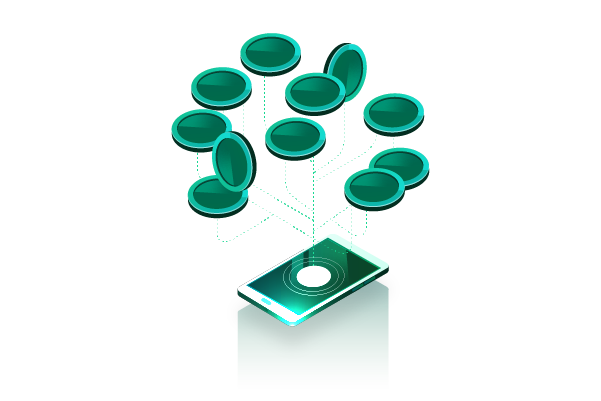
The Web3 space is evolving at breakneck speed. From decentralized finance (DeFi) to NFTs, from DAO governance to AI-powered blockchains—2026 is poised to be a pivotal year. In this article, we’re diving deep into 10+ Web3 projects that are turning heads and opening wallets in the crypto community.
Whether you’re a developer, investor, or just curious about what’s next after the 2021 DeFi summer and the 2022 NFT craze, this guide gives you the edge.
1. HeLa
Sector: AI x Web3 Infrastructure
Market Cap: Undisclosed (Private and early VC rounds ongoing)
HeLa is a game-changer. Named after the immortal cell line that transformed biomedical research, HeLa aims to bring the same transformation to decentralized artificial intelligence. Think of it as the operating system for AI in Web3—a decentralized framework that lets devs build, train, and monetize AI models without central gatekeepers.
Key Features:
AI Nodes: Community-run compute nodes process and train models.
Data Sovereignty: Users retain full control of their data and can monetize it through smart contracts.
Cross-chain Interoperability: HeLa supports Ethereum, Polkadot, Solana, and Cosmos out of the box.
On-chain Governance: Token holders vote on proposals, model training priorities, and protocol upgrades.
2. Chainlink (LINK)
Sector: Decentralized Oracle Networks / Interoperability
Why It Matters: Smart contracts are powerful but fundamentally blind to the outside world. Chainlink provides the vital infrastructure that securely connects blockchains to real-world data, external APIs, and traditional bank payment systems. Highlights:
The industry standard for secure price feeds securing tens of billions in DeFi value.
Cross-Chain Interoperability Protocol (CCIP) has become a primary bridge for token transfers and cross-chain messaging.
Pioneering the tokenization of Real-World Assets (RWAs) through partnerships with traditional financial institutions.
3. Polkadot (DOT)
Sector: Layer 0 / Multichain Interoperability
Why It Matters: Polkadot acts as a foundational layer (Layer 0) that allows distinct blockchains (parachains) to operate securely and communicate seamlessly with one another under a shared security umbrella. Highlights:
Agile Coretime allocation optimizes blockspace utility, making it significantly cheaper for developers to launch on Polkadot.
Cross-Consensus Messaging (XCM) allows complex smart contracts spanning multiple specialized blockchains.
Highly active developer community pushing the boundaries of Web3 governance and treasury management.
4. Ethereum (ETH)
Sector: Layer 1 / Smart Contract Pioneer
Why It Matters: Ethereum remains the undisputed king of smart contracts and decentralized applications. As the most secure and widely adopted Web3 platform, it sets the standard for everything from DeFi to modular scaling. Highlights:
A thriving Layer 2 ecosystem (rollups) that processes the vast majority of network transactions at ultra-low fees.
Robust liquid staking and restaking economies that secure the network while providing capital efficiency.
Unmatched developer tooling, network effects, and institutional adoption.
5. Internet Computer (ICP)
Sector: Decentralized Cloud / AI Infrastructure
Why It Matters: The Internet Computer enables developers to build fully on-chain web applications without relying on centralized cloud providers like AWS. It uniquely hosts software logic and data natively within tamper-proof “canister” smart contracts. Highlights:
Native on-chain AI inference allows AI models to run directly as smart contracts, offering unmatched transparency.
Chain Fusion technology natively integrates ICP with networks like Bitcoin, Ethereum, and Solana without centralized bridges.
Enterprise-grade security upgrades, like Secure Encrypted Virtualization (SEV) subnets, for robust data protection.
6. Uniswap (UNI)
Sector: Decentralized Exchange (DEX) / DeFi
Why It Matters: Uniswap is the automated market maker (AMM) that revolutionized how digital assets are traded. By eliminating order books and central intermediaries, it provides permissionless liquidity to the entire Web3 ecosystem. Highlights:
Uniswap v4 introduces “hooks,” allowing developers to build custom logic (like limit orders or dynamic fees) directly into liquidity pools.
Consistently generates more trading volume than many top-tier centralized exchanges.
Expanding across multiple Layer 2 networks to offer ultra-fast, cheap swaps.
7. Aave (AAVE)
Sector: Decentralized Lending & Borrowing
Why It Matters: Aave is the premier non-custodial liquidity protocol. It functions as the central bank of DeFi, allowing users to earn interest on deposits and borrow assets using their crypto as collateral. Highlights:
Pioneered flash loans—uncollateralized loans that must be borrowed and returned within a single transaction block.
The native GHO stablecoin enhances capital efficiency and generates protocol revenue.
Aave v3 focuses on robust risk management and seamless cross-chain liquidity provisions.
8. Filecoin (FIL)
Sector: Decentralized Storage / DePIN (Decentralized Physical Infrastructure)
Why It Matters: In Web3, depending on centralized servers to host NFT data or dApp frontends defeats the purpose of decentralization. Filecoin turns unused global storage into an algorithmic, peer-to-peer storage market. Highlights:
The launch of the Filecoin Virtual Machine (FVM) brings programmability and smart contracts directly to stored data.
Cost-effective, permanent storage solutions that are increasingly being used to host massive AI datasets.
Acts as the essential hard drive for the decentralized web.
9. The Graph (GRT)
Sector: Data Indexing & Querying / Infrastructure
Why It Matters: Blockchains are essentially massive databases, but retrieving specific information from them is notoriously difficult. The Graph is often dubbed the “Google of Blockchains” because it indexes network data to make it instantly queryable. Highlights:
Utilizes subgraphs—open APIs that decentralized applications use to fetch blockchain data efficiently via GraphQL.
Crucial infrastructure for dashboards, data analytics platforms, and DeFi user interfaces.
Transitioning towards a fully decentralized network of indexers, curators, and delegators.
10. Lens Protocol (LENS)
Sector: Decentralized Social (DeSo)
Why It Matters: In a world tired of Meta and Twitter algorithms, Lens offers ownership of your online identity. It provides the backend plumbing for decentralized social media, ensuring creators own their content and connections. Highlights:
A composable social graph where profiles, followers, and posts are represented as digital assets on-chain.
Interoperability means a user’s audience ports seamlessly across any decentralized application built on the Lens ecosystem.
Unlocks novel monetization paths for creators free from corporate censorship or de-platforming.
11. Arweave (AR)
Sector: Decentralized Permanent Storage / DePIN
Why It Matters: Unlike traditional cloud storage—which requires monthly subscriptions—Arweave offers a “pay once, store forever” model. It powers the “permaweb,” a decentralized web where data is stored immutably for generations. Highlights:
Essential for preserving historical records, permanent NFT metadata, and censorship-resistant web applications.
The AO computer layer brings scalable, parallel processing capabilities to data stored on Arweave.
Solves the link-rot problem inherent to the traditional HTTP-based web.
Impact of Web3 on Different Industries
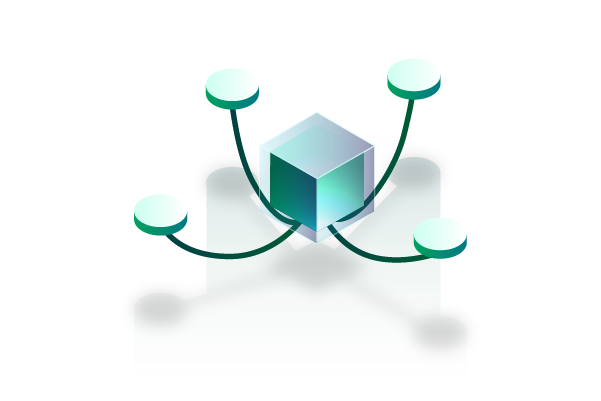
Web3, characterized by decentralized networks and blockchain technologies, promises significant transformations across multiple sectors. As we explore its potential impacts, it’s evident that industries such as finance, media, and healthcare could experience profound changes. This section delves into how Web3 can leverage blockchain to enhance various aspects of these industries.
Finance
In the financial sector, Web3 could redefine banking and investment services by introducing decentralized finance (DeFi) systems. These systems aim to eliminate intermediaries such as banks, allowing for more direct and efficient financial transactions. Blockchain technology ensures transparency and security, potentially reducing fraud and enhancing trust among users.
Media
The media industry could benefit from Web3 by gaining mechanisms for better copyright management and revenue distribution. Blockchain’s immutable ledger allows content creators to maintain control over their digital rights and receive fair compensation through direct payments from consumers, bypassing traditional media conglomerates.
Healthcare
In healthcare, Web3 technologies could revolutionize data management and patient privacy. Blockchain could provide a secure platform for storing and sharing medical records, ensuring data integrity and accessibility while protecting patient confidentiality. This would facilitate a more coordinated approach to healthcare, improving outcomes through seamless exchange of information among providers.
Overall, Web3 is poised to foster a more interconnected and user-empowered global economy, making industries more transparent, efficient, and secure. The insights provided in this section highlight the transformative potential of blockchain across various sectors, suggesting a shift towards more decentralized and user-centric models.
Challenges Facing Web3 Adoption

Despite its potential, the adoption of Web3 is met with several significant challenges that could impede its integration into the mainstream. This section aims to delve into these primary obstacles, including scalability concerns, regulatory ambiguities, and the essential requirement for user education.
- Scalability Issues: One of the foremost technical challenges for Web3 is scalability. The current infrastructure of blockchain technology, which is fundamental to Web3, struggles to handle high transaction volumes without compromising speed or increasing costs. This section will analyze how scalability issues affect user experience and what solutions are being developed to address this challenge.
- Regulatory Uncertainty: The lack of clear regulatory frameworks for cryptocurrencies and blockchain technology poses a significant barrier to Web3’s adoption. This uncertainty can deter investment and innovation within the space. We will discuss the current regulatory landscape and its implications for businesses and developers looking to enter the Web3 ecosystem.
Also Read: How to Diversify Your Crypto Portfolio
- Need for User Education: The complexity of blockchain technologies and the novelty of Web3 concepts require a steep learning curve for average users. Enhancing user education is crucial for increasing the adoption rate. This part will cover the strategies and initiatives aimed at making Web3 more accessible and understandable to the general public.
- Technological Hurdles: Beyond scalability, there are other technological challenges that developers face in transitioning from traditional web platforms to decentralized alternatives. Issues such as interoperability between different blockchain systems, privacy concerns, and user interface design are critical areas that need addressing. This section will explore these hurdles in depth, discussing both the problems and potential solutions being proposed in the Web3 community.
By addressing these challenges, stakeholders in the Web3 space can pave the way for more robust and user-friendly decentralized applications, fostering broader acceptance and use.
Future Prospects of Web3 Projects

As we explore the horizon of Web3, it’s crucial to speculate not only on its potential trajectory but also on the multifaceted influences that could sculpt its future. This section delves into the emerging trends, anticipated technological advancements, and the ever-shifting regulatory frameworks that are poised to define the landscape of Web3.
- Emerging Trends: The ongoing integration of AI, machine learning, and decentralized finance (DeFi) services within Web3 platforms is expected to further blur the lines between traditional financial systems and blockchain technology. This convergence could catalyze new forms of interaction and transaction mechanisms across digital environments.
- Technological Advancements: Innovations such as enhanced blockchain scalability solutions and more robust privacy-preserving technologies are anticipated. These developments will likely enhance the user experience and expand the capabilities of Web3 applications, making them more accessible and efficient.
- Regulatory Landscape: As Web3 continues to evolve, so too does the scrutiny from global regulators. The future could see a more defined legal framework that supports the safe and ethical development of Web3 technologies while ensuring user protection and system integrity.
- Driving Innovation and Adoption: The combination of these factors is expected to foster significant innovation within the Web3 ecosystem. More intuitive user interfaces, increased network efficiencies, and novel application cases could drive wider adoption and highlight the ongoing relevance of Web3 projects.
Through this forward-looking lens, we can anticipate how these elements might converge to not only drive innovation but also challenge the existing paradigms, ensuring the vibrancy and continuity of Web3 initiatives in the digital age.
Conclusion
Web3 represents a pivotal shift in how we interact with the digital world, promising a more decentralized, secure, and user-centric internet. The top +10 Web3 crypto projects of 2026 demonstrate the diverse applications and immense potential of blockchain technology. As we have explored, these projects are not only transforming existing industries but are also paving the way for new forms of digital interaction and economic models.
However, the path to widespread Web3 adoption is not without its challenges. From technical barriers to regulatory hurdles, these projects must navigate a complex landscape to realize their full potential. Nevertheless, the continued development and refinement of Web3 technologies suggest a bright future, characterized by innovation and greater user empowerment.
As we look to the future, it’s clear that Web3 will play a crucial role in shaping the next generation of the internet. For anyone interested in the intersection of technology and society, keeping an eye on these top 10 Web3 crypto projects is essential. They are not only a window into the future of the digital age but also an opportunity to participate in the creation of a more equitable and decentralized online world.

Joshua Soriano
I am a writer specializing in decentralized systems, digital assets, and Web3 innovation. I develop research-driven explainers, case studies, and thought leadership that connect blockchain infrastructure, smart contract design, and tokenization models to real-world outcomes.
My work focuses on translating complex technical concepts into clear, actionable narratives for builders, businesses, and investors, highlighting transparency, security, and operational efficiency. Each piece blends primary-source research, protocol documentation, and practitioner insights to surface what matters for adoption and risk reduction, helping teams make informed decisions with precise, accessible content.