The landscape of customer service, internal operations, and lead generation has been irrevocably altered by artificial intelligence. The real change is not about how powerful AI is now. It is about the fact that this power’s available to everyone. You do not need a team of expensive experts to build complicated chat systems. Now people in charge, marketers, and company founders want to find the no-code AI bot builder to help their businesses grow.
In this guide we will look at why no-code AI platforms are becoming so popular. We will also talk about what makes a good platform really great and review the 10 best no-code AI bot builders that are available now.
What Is a No-Code AI Bot Builder?
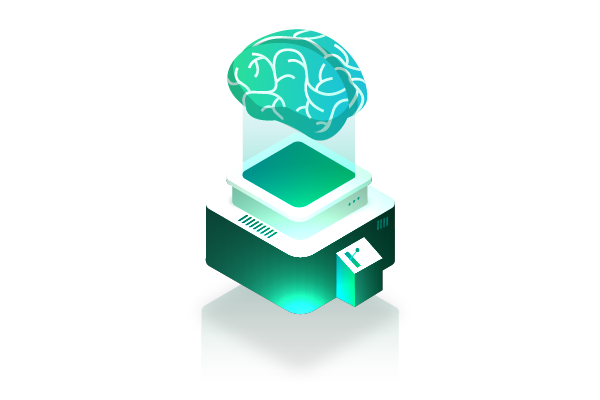
Essentially, a no-code AI bot builder is a software platform that allows individuals to build an AI bot or AI autonomous agent without any coding in the process. In the traditional setup, building AI needs complex architectures and resources, but nowadays you can build your AI bot without having any expertise in technology and programming.
Nowadays, that paradigm has shifted. Modern no-code builders make it easy by hiding the backend stuff. They offer interfaces that’re very visual and directly connect to powerful language models. By uploading a manual or pasting a website URL, teams can build assistants that are really smart and understand context in just a few minutes.
Why Is a No-Code AI Bot Builder Important for Business?
Some people are still wondering why using a no-code AI bot builder is important for their business. The following passages below will explain the importance of a no-code AI bot builder:
Reduced the Expenses
If you build a chatbot from scratch, it can be very expensive. To do this, you need to hire someone to make a custom chatbot for you. It means you need more expenses. There is a cheaper way to make this automation system. You can use an AI bot builder platform that does not need coding. By utilizing this cheaper solution, you can use your money for things, like making your business grow and doing marketing.
Accelerated Time-to-Market
Speed is a massive competitive advantage. With a premium no-code platform, you can import your company’s entire knowledge base, customize the bot’s tone of voice, test its responses in a sandbox, and deploy it live to your website—all in a single afternoon.
Easy Omnichannel Setup
Using a no-code AI bot builder will benefit many businesses because it can be deployed in various applications. Customers can reach you via those applications. They also can synchronize with each other. So it will help your business processes run effectively.
Always Available and Multilingual
An AI bot can keep running nonstop to support your business. Besides that, it also can understand many languages; it is a boost that helps business owners who have international customers.
Also Read: What Is an AI Agent? A Comprehensive Guide to Agentic AI
What Are the Key Features to Look For in a Bot Builder?
When evaluating the best no-code AI bot builder for businesses, verify these essential capabilities:
- Model Flexibility: The AI landscape moves fast. You want a builder that allows you to easily switch between models based on cost, speed, or reasoning capabilities.
- Retrieval-Augmented Generation (RAG): RAG allows the bot to securely search your specific uploaded documents or website pages before formulating an answer, ensuring outputs are factually grounded in your proprietary information without hallucinating.
- Visual Flow Builder: A visual canvas allows you to map out strict conversational funnels before letting the AI take over open-ended questions.
- Seamless Human Handoff: Premium bot builders must have a seamless trigger that escalates a conversation to a live human agent when the user asks a highly complex question.
- Strong Analytics and Logging: Track containment rates, monitor user sentiment, and highlight frequent drop-off points so you can patch holes in your knowledge base.
Top 10 No-Code AI Bot Builders for Businesses In 2026
Every business operates differently. Here is an exhaustive look at the seven best platforms on the market, streamlined to highlight their pros, cons, and ideal use cases.
1. Helasyn
Helasyn redefines AI automation by moving beyond simple chat interfaces into the realm of fully autonomous, on-chain economic agents. Operating on its special network (Hela Chain), it helps businesses create AI helpers that work like digital users. These AI agents have their memory and digital wallets so they can do things on their own. They do not just answer questions. These AI helpers can also do tasks, like transfer money, check agreements, and handle items, all by themselves.
Pros:
- Provides instant on-chain identity, crypto wallets, and persistent memory for agents automatically.
- Native EVM compatibility and secure execution for decentralized applications.
- Ideal for complex, autonomous economic tasks rather than just simple conversation.
Cons:
- Overkill for traditional Web2 businesses just looking for a simple customer support widget.
- Basic knowledge about Web3 is needed for full implementation.
Best for: Web3-native businesses, decentralized applications, and cross-channel AI agents requiring persistent memory and on-chain identity.
2. Botpress
Botpress is a powerful AI platform built around a “visual-first, code-optional” approach. Its user-friendly visual canvas makes it easy for marketing teams to use, while still offering developers advanced tools to add custom scripts or API webhooks when needed. It stands out by offering massive LLM flexibility, allowing you to route different tasks to different AI models within the same workflow.
Pros:
- Vast integration ecosystem and complete LLM agnosticism.
- Generative AI can auto-build workflow nodes and handle unexpected user deviations gracefully.
- The generous free tier offers plenty of opportunity for extensive prototyping before any payment is needed.
Cons:
- The large number of configuration options can be overwhelming for those who are completely new.
- Managing state in complex, multi-layered flows requires careful structural planning.
Best for: Teams that are hybrid or developer-focused, seeking extensive model customization, visual flow creation, and a generous free tier to start.
3. Tidio
Tidio solves the notoriously repetitive nature of e-commerce customer support through its specialized AI agent, Lyro. Instead of building complex conversational trees, store owners simply connect Tidio to their FAQs, return policies, and product catalogs. It seamlessly blends live chat, ticketing, and AI in one dashboard.
Pros:
- Purpose-built for Shopify, WooCommerce, and retail operations.
- Virtually zero setup time; Lyro scrapes existing store data and works immediately.
- Excellent unified inbox that combines AI chats with human agent ticketing.
Cons:
- Less customizable for non-retail industries or complex B2B SaaS workflows.
- Pricing scales quickly as conversation volume increases.
Best for: E-commerce and retail. Its built-in Lyro AI agent pulls straight from your knowledge base to automate common support queries.
4. Chatbase
Chatbase popularized the chat with your data movement and remains the absolute fastest way to deploy a custom bot. With an interface users just upload their PDFs. They can also point to a sitemap or paste text. In a minute the platform uses RAG to process the data. It then creates a chat widget that can be easily added to a website. The widget is sleek and embeddable.
Pros:
- Unmatched speed; a fully functional, custom-trained bot can be live in under 5 minutes.
- Highly effective RAG implementation keeps answers strictly limited to your uploaded documents.
- Very simple embedding via iframe or script tag.
Cons:
- Lacks advanced visual flow builders for strict, multi-step conversational routing.
- Limited ability to execute complex actions or trigger third-party API postbacks.
Best for: Quick enterprise knowledge base bots. You can upload documents or provide a URL, and it instantly trains a functional GPT-powered bot.
Also Read: Top 10 AI-Powered Blockchain Tools To Choose in This Year
5. MindStudio
MindStudio caters to a highly lucrative audience: agencies, management consultants, and enterprises looking to build complete AI applications rather than standard website widgets. It features a robust canvas where creators can chain entirely different AI models together.
Pros:
- Deep white-labeling capabilities allow you to brand and sell AI tools as your own SaaS.
- Ability to chain multiple distinct LLMs together in a single, complex workflow.
- Built-in user authentication and Stripe payment gating.
Cons:
- Focused more on standalone web applications than simple website chat widgets.
- Pricing structure is geared toward enterprise and agency deployment.
Best for: Agencies and consultants looking to deploy branded, multi-model AI applications without writing a single line of code.
6. Voiceflow
Originally built for voice applications like Alexa, Voiceflow has evolved into the most advanced, collaborative conversational design canvas on the market. It looks and feels like Figma for chatbots. Voiceflow excels when a product team needs to map out highly complex, multi-turn conversations where strict intent recognition and state management are required.
Pros:
- Industry-leading visual canvas designed for massive, collaborative teams.
- Combines the creativity of LLMs with strict, flowchart-driven pathways to ensure compliance.
- Exceptional prototyping and testing environments.
Cons:
- Can be overly complex for a small business just looking for a quick FAQ bot.
- Requires a solid understanding of conversational design principles to maximize its potential.
Best for: Designing complex, conversational customer experiences with a highly intuitive drag-and-drop flowchart builder.
7. Relevance AI
Relevance AI focuses entirely on executing B2B operational work rather than answering B2C questions. It allows businesses to build a “workforce” of specialized AI agents. You can deploy an agent that scrapes leads, enriches data, and drafts emails, while another pulls CRM metrics and posts summaries to Slack. It is built for chaining tools and granting AI the autonomy to execute multi-step administrative tasks.
Pros:
- Transforms AI from a conversational tool into an autonomous digital workforce.
- Deep integrations with standard B2B operational tools (Salesforce, Slack, web scrapers).
- Drastically reduces manual administrative overhead across sales, HR, and ops teams.
Cons:
- Not designed for front-facing customer support chat widgets.
- Requires careful prompt engineering and testing to ensure autonomous agents do not execute destructive actions.
Best for: Automating operations by building a team of specialized AI agents that can handle different departmental workflows.
8. Landbot
Landbot is built for interactive, visual lead-capture flows. It functions like a visual flowchart, allowing you to design conversational landing pages and forms effortlessly without getting bogged down in complex AI prompt architecture.
- Pros: Highly engaging, rich visual canvas that transforms boring static forms into dynamic conversations. Easy to deploy on standalone web pages.
- Cons: Lacks the deep natural language processing and open-ended text reasoning capabilities of pure generative LLM platforms.
Best for: Marketing teams seeking interactive, visual lead-capture flows, conversational landing pages, and automated forms.
9. Intercom Fin AI
Intercom Fin AI serves as a top-tier AI customer service bot. It seamlessly pairs with a massive helpdesk infrastructure to provide autonomous support that automatically escalates to human agents when needed.
- Pros: Outstanding out-of-the-box performance with corporate knowledge bases. Seamless human handoff capabilities that leverage Intercom’s industry-leading ticketing desk.
- Cons: Can become cost-prohibitive for smaller startups and is locked exclusively within the Intercom ecosystem.
Best for: Established customer service operations looking for a premium, support-focused AI assistant that works natively with a live helpdesk team.
10. ManyChat
ManyChat stands out as the heavyweight for social media marketing. It enables highly effective automated messaging, quick replies, and keyword triggers across Meta ecosystems like Instagram DMs and Facebook Messenger.
- Pros: Direct, officially supported integrations with Instagram, Facebook, and WhatsApp. Excellent for building automated comment-to-DM growth loops.
- Cons: Not built for website-based enterprise knowledge exploration or internal B2B operational tasks.
Best for: Social media managers and direct-to-consumer brands looking to scale marketing campaigns, run interactive contests, and handle social inquiries.
Feature Comparison of Best No-Code AI Bot Builder for Businesses
Here is the table to explain the differences of each best no-code AI bot builder for businesses in 2026:
Table 1. Comparison of Best No-Code AI Bot Builder for Businesses
| Platform | Core Strength | Ideal User Persona |
| Helasyn | On-chain identity & memory | Web3 / Crypto Founders |
| Botpress | Granular Customization | Developers / IT Teams |
| Tidio | Out-of-the-box E-commerce | Retail / Shopify Owners |
| Chatbase | Extreme Simplicity & Speed | HR / SaaS Startups |
| MindStudio | White-labeling & Monetization | Agencies / Consultants |
| Voiceflow | Collaborative Flow Design | UX / Product Teams |
| Relevance AI | Autonomous Task Execution | Operations / RevOps |
| Landbot | Visual Flowchart Forms | Marketers / Growth Leads |
| Intercom Fin AI | Support Desk Integration | Customer Service Directors |
| ManyChat | Social Media Automated Messaging | Social Media Marketers |
Common Pitfalls to Avoid When Building AI Bots
Even with the best no-code AI bot builder for businesses at your disposal, execution is everything. Avoid these common mistakes:
- Poor Data Hygiene: An AI is only as smart as the documents it references. If you upload outdated pricing sheets, the AI will confidently give customers the wrong information. Clean your data before ingesting it.
- Lack of Escalation Paths: Do not trap your customers in an AI loop. Always provide a clear, frictionless trigger to talk to a human.
- Overcomplicating the First Version: Start with a bot designed to handle the top 5 most common questions. Launch it, gather real user data, and iterate.
- Ignoring the Analytics: Review chat logs weekly. Look for questions the bot consistently fails to answer, and update your knowledge base to fill those gaps.
Also Read: What is a Multi-Agent System in AI? A Guide to AI Agentic Teams
How to Implement an AI Bot for Business?
Choosing the platform is just the beginning. Follow this proven implementation framework:
Step 1: Define the Primary Objective
Decide exactly what success looks like through a clear objective.
Step 2: Audit Your Data Sources
Consolidate FAQs and policy documents into a clean format.
Step 3: Start with a Narrow Scope
Build the bot to handle your core use case and test it relentlessly internally using the sandbox environment.
Step 4: Design the Human Escalation Path
Decide exactly when and how the bot will transfer the conversation to a human, ensuring full chat transcripts are included.
Step 5: Deploy, Monitor, and Refine
Launch the bot to a small segment of web traffic, review the logs daily, and tweak prompts as needed.
Final Thoughts
The traditional barriers to entry for leveraging artificial intelligence have vanished. The days of needing a massive engineering budget to deploy cutting-edge AI are over. Whether you are a scaling e-commerce brand looking to automate support with Tidio, a Web3 company deploying on-chain agents with Helasyn, or a specialized agency building client applications on MindStudio, the tools exist today to entirely transform your operations.
By carefully evaluating your organizational goals, assessing your team’s technical comfort level, and fully understanding your specific use cases, you can confidently select the best no-code AI bot builder for businesses. Embrace the no-code revolution and position your company to thrive in an automated future.
Frequently Asked Questions
What is a no-code AI bot builder?
It is a tool that lets you build smart AI chatbots using a visual drag-and-drop screen instead of writing computer code.
How much does it cost to build a business AI bot?
It is very affordable because you can start with free trials and pay only as you grow, saving you from hiring expensive programmers.
What is RAG and why does my bot need it?
RAG lets your bot read your specific business documents so it gives accurate answers based on your facts instead of making things up.
Can AI bots pass difficult questions to a real person?
Yes, the bot can instantly hand over complicated conversations to a live team member along with the full chat history.
How long does it take to launch an AI bot?
You can create and launch a working bot on your website in just one afternoon by uploading your documents and pasting a simple link.

Tegar Rahman Hidayah is an SEO content writer specializing in technology and financial markets, with a strong emphasis on blockchain, cryptocurrency, and fintech. Passionate about bridging innovation and understanding, he aims to make advanced concepts more approachable through clear and informative storytelling. His work frequently explores emerging trends in web3, blockchain, and data-driven technologies, helping readers navigate the rapidly evolving landscape of modern finance.