
AI agent architecture is the structure that lets an AI system perceive its environment, reason about a goal, remember context, and take actions to reach that goal. At its core, it turns a stateless language model into a system that runs a continuous loop: receive input, plan, act, observe the result, update memory, and repeat until the task is done.
Every AI agent, regardless of what it does, rests on the same building blocks: perception, a reasoning engine, memory, and tools for taking action. How those blocks are arranged, and how much freedom the model has to direct its own steps, defines the architecture. This guide breaks down the core components, the main architecture types, the design patterns that have become standard in 2026, and the practices that separate reliable agents from brittle ones.
This article is a technical explainer for a general and developer audience. Product names and patterns reflect the state of the field in mid-2026.
What Is AI Agent Architecture?
AI agent architecture is the design blueprint that defines how an autonomous AI system senses inputs, makes decisions, and executes actions to achieve a goal with limited human oversight.
The distinction that matters most is between a plain language model and an agent. A large language model on its own only predicts text. It becomes an agent when it is wrapped in infrastructure that gives it memory, tools, and the ability to run a loop of action and observation. Telling a model to “act like a project manager” does not make it an agent. The agent behavior emerges from the surrounding architecture.
Anthropic frames a useful split here: workflows orchestrate models and tools along predefined code paths you control, while agents let the model dynamically direct its own process and tool use. Workflows are more predictable and easier to debug, and agents are more flexible but harder to constrain (Anthropic: Building Effective Agents).
The takeaway is that architecture is a spectrum of autonomy, not a single design. The right point on that spectrum depends on how predictable the task is.
Also Read: What Is Index Trading? A Clear Guide to Market-Based Investing
What Are the Core Components of an AI Agent?
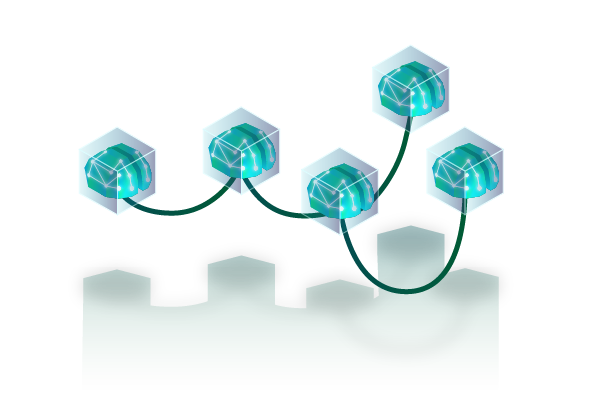
Most agent architectures share four core components that work together in a loop. Each transforms a stateless model into something that can learn, remember, and act.
Perception
The perception layer is how an agent receives and interprets inputs. It catches triggers and translates raw data into a structured form the reasoning engine can use. Inputs can be a chat message, an incoming email, a form submission, a scheduled event, or a read from an internal system like a CRM or database. The perception layer decides what the agent is even allowed to pay attention to.
Reasoning and planning
The reasoning engine is the agent’s brain. It interprets the goal, breaks it into sub-tasks, chooses which tool to call, and adapts when conditions change. This is where patterns like ReAct and Plan-and-Execute live. Good reasoning includes state management, so the agent keeps track of what it has already done.
Memory
Memory lets an agent carry context across steps and sessions. Short-term memory holds the current conversation inside the context window, while long-term memory stores past interactions and knowledge for later retrieval, often in a vector database. In 2026, memory is treated as a first-class architectural component with its own benchmarks and tooling.
Tools and action
Tools are how an agent affects the world. Through them, an agent can search the web, run code, call APIs, query databases, or control a browser. The action layer executes the chosen tool call and then feeds the result back for the next round of reasoning.
The key point is that these components are only useful together. Perception without action is passive, and reasoning without memory forgets its own progress.
How Does an AI Agent Work? The Agent Loop
An AI agent works by running a repeating loop until it reaches its goal or hits a stopping condition. The terminology varies across papers and frameworks, but the structure is consistent.
A typical loop looks like this:
- The goal is defined by the user or another system.
- Perception ingests the relevant inputs and context.
- Reasoning decides the next step.
- Planning breaks the work into an ordered set of actions.
- Action executes a tool call or output.
- Observation captures the result of that action.
- Memory update records what happened.
- The loop returns to reasoning with new information.
This continues until the goal is met, a limit is reached, or the agent decides it needs human input. This action-observation cycle is what makes an agent adaptive rather than a fixed script.
Also Read: What Is High-Frequency Trading? Benefits, Risks, and Market Impact
What Are the Main Types of AI Agent Architecture?
Agents are usually grouped into three architectural models, plus the split between single-agent and multi-agent systems.
| Architecture | How It Behaves | Best For |
| Reactive | Responds to inputs with no memory or planning | Fast, simple, stateless tasks |
| Deliberative | Plans ahead using an internal model and memory | Complex, multi-step reasoning |
| Hybrid | Combines quick reactions with deliberate planning | Most real-world production agents |
A reactive agent simply maps an input to an output with no memory of what came before. A deliberative agent maintains state, models its environment, and plans several steps ahead. A hybrid agent blends both, handling routine events quickly while planning carefully for harder ones. Most production systems are hybrid.
Separately, agents can be single-agent or multi-agent. A single agent handles the whole task itself. A multi-agent system splits work across specialized agents, such as a planner that delegates to worker agents and a critic that checks results. Multi-agent designs can be faster and more capable, but they add coordination and cost.
What Are the Common AI Agent Design Patterns?
By 2026, a shared vocabulary of design patterns has emerged. Each pattern solves a specific failure mode, and real systems usually combine several.
- ReAct (Reasoning and Acting): interleaves a reasoning step with a tool call so the agent explains why it acts before acting. It is the recommended starting point for most first agents.
- Reflection: the agent critiques its own output and revises it in a generate-critique-refine cycle, which raises quality on tasks like code and writing.
- Tool Use: structured, schema-validated calls to external systems, where the model returns JSON matching a defined schema rather than free text.
- Planning: an outer loop breaks a large goal into sub-tasks before execution begins.
- Evaluator-Optimizer: one component generates while another scores and pushes for improvement.
- Multi-Agent Collaboration: specialized agents divide and coordinate work, often a planner plus workers plus a reviewer.
- Human-in-the-Loop: risky or high-stakes actions pause for human approval before proceeding.
A common production shape combines them: a planning loop sets the route, ReAct-style workers execute with tools, reflection validates the output, and human-in-the-loop gates anything sensitive. The discipline is restraint. Start from an actual failure in your traces and add only the one pattern that addresses it.
How Do AI Agents Use Memory?
Memory is what lets an agent stay coherent across a long task, and it is often organized in tiers by speed and permanence.
A common layered setup includes in-context memory for the immediate conversation, a fast cache for recent state, a vector store for semantic long-term recall, and a durable database checkpoint for full state that can be resumed later. Memory is also described by type: episodic memory of past events, semantic memory of facts, and procedural memory of how to perform tasks.
Long-term memory usually relies on retrieval-augmented generation (RAG), where the agent searches a vector store for relevant information and adds it to the prompt. This keeps the context window focused while still giving the agent access to a large knowledge base.
The takeaway: memory is no longer an afterthought. Choosing the right memory design early prevents architectures that have to be rebuilt later.
What Role Do Tools and Protocols Play?
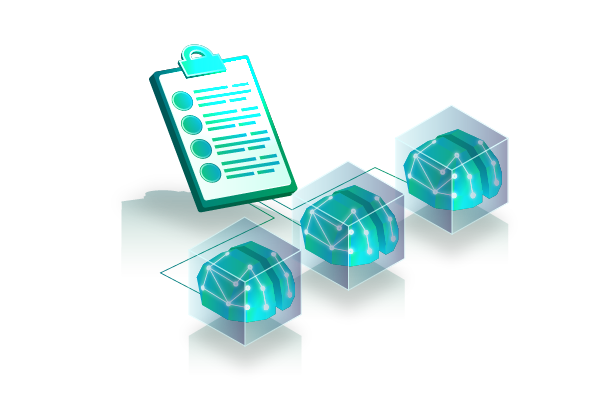
Tools connect an agent to the outside world, and in 2026 the way agents call tools has become standardized. The Model Context Protocol (MCP), introduced by Anthropic, has become a widely adopted interface for exposing tools and data to agents in a consistent way. Agent protocol standards are also converging, with efforts like Google’s Agent2Agent (A2A) and OpenAI’s Agents SDK moving toward interoperability.
Standardized tool interfaces matter because they reduce custom glue code and make agents more portable across models and platforms. A well-documented tool schema is often more important to reliability than the agent’s reasoning logic. In practice, many production failures trace back to poor tool definitions rather than the architecture itself.
What Are the Best Practices for Designing AI Agent Architecture?
The most successful teams tend to follow a few consistent principles.
- Start simple. Begin with a single ReAct agent and a small, well-scoped tool set before adding complexity.
- Fix prompts and tools first. Most agentic failures are prompt or tool-schema problems, not architecture problems. Adding a reflection loop to a system with a broken tool schema does not help.
- Invest in observability. Step-level traces that capture reasoning, tool calls, and results are the only reliable way to debug what an agent actually did.
- Design guardrails by risk. Use validation, rate limiting, and approval gates where the stakes justify them, and consult security references like the OWASP Top 10 for LLM Applications.
- Treat human oversight as a pattern. Route routine work to autonomy and escalate specific decisions to a human by design, not as an afterthought.
The bottom line is restraint and visibility. Add autonomy only where a fixed path genuinely cannot be defined in advance.
What Are the Challenges of AI Agent Architecture?
Even well-designed agents face real limitations that architecture has to account for.
- Reliability and drift. Long reasoning traces can dilute earlier context, and ReAct-style agents often lose the thread after several tool calls.
- Cost and overhead. Agent loops make many model calls, so for tasks solvable in one or two calls, an agent can add large overhead for no benefit.
- Security. Agents with tool and wallet access can cause real damage if compromised or prompt-injected, which makes permission isolation essential.
- Evaluation. Testing shifts from checking single prompts to integration testing whole flows against benchmark datasets and regression suites.
Understanding these limits helps teams decide when an agent is the right tool and when a simpler workflow or a single model call will do.
Also Read: 10 Best Paper Trading Platforms for Smarter Demo Trading this Year
Key Takeaways
AI agent architecture is the framework that turns a language model into an autonomous system able to perceive, reason, remember, and act. Its four core components, perception, reasoning and planning, memory, and tools, work together in a loop of action and observation that continues until a goal is met.
The field has matured into a shared toolkit. Architectures range from reactive to deliberative to hybrid and from single to multi-agent, and a small set of design patterns like ReAct, Reflection, Planning, and Human-in-the-Loop now form a common language. Standardized tool protocols such as MCP make these systems more portable, while observability and guardrails keep them reliable.
Frequently Asked Questions
What is AI agent architecture in simple terms?
It is the way an AI agent is structured so it can take in information, decide what to do, remember context, and act. It combines perception, reasoning, memory, and tools into a loop that runs until the goal is reached.
What are the main components of an AI agent?
The four core components are perception, reasoning and planning, memory, and tool-based action. Perception handles inputs, reasoning decides next steps, memory retains context, and tools let the agent act on the world.
What is the difference between a workflow and an agent?
A workflow follows predefined code paths that a developer controls, making it predictable. An agent lets the model dynamically choose its own steps and tools, making it more flexible but harder to constrain. Use a workflow when steps are known in advance and an agent only when the path cannot be fixed ahead of time.
What is the ReAct pattern?
ReAct, short for Reasoning and Acting, is a pattern where the agent reasons about what to do, takes an action such as a tool call, observes the result, and repeats. It reduces blind tool calls by tying each action to explicit reasoning and is a common starting point for new agents.
What is a multi-agent architecture?
A multi-agent architecture splits a task across several specialized agents that coordinate, such as a planner, worker agents, and a critic. It can handle larger or more complex tasks than a single agent but adds coordination overhead and cost.
What is MCP in AI agent architecture?
MCP, the Model Context Protocol, is a standardized way to connect agents to tools and data sources. It reduces custom integration code and makes agents more portable across different models and platforms.
The most durable advice is to start simple, fix prompts and tools before reaching for complex patterns, and add autonomy only where it is genuinely needed. Build for visibility and restraint, and the architecture will hold up as tasks grow more demanding.

Joshua Soriano
I am a writer specializing in decentralized systems, digital assets, and Web3 innovation. I develop research-driven explainers, case studies, and thought leadership that connect blockchain infrastructure, smart contract design, and tokenization models to real-world outcomes.
My work focuses on translating complex technical concepts into clear, actionable narratives for builders, businesses, and investors, highlighting transparency, security, and operational efficiency. Each piece blends primary-source research, protocol documentation, and practitioner insights to surface what matters for adoption and risk reduction, helping teams make informed decisions with precise, accessible content.