Blockchains are built to let many people share one system of records, without needing a central owner. This sounds simple, but it is hard to do at a large scale. When more people use a network, the system can become slow or costly.
This challenge is often explained with one key idea: What is the blockchain trilemma? The trilemma says that a blockchain tries to reach three goals at the same time, but it is difficult to get all three at a high level. If one goal improves, another goal can get worse.
This article explains the blockchain trilemma in simple words. It also shows how Layer 2 (L2) networks, sharding, and rollups try to balance these goals. Each approach has benefits and limits, so it helps to understand how they work before trusting them.
What is the Blockchain Trilemma?
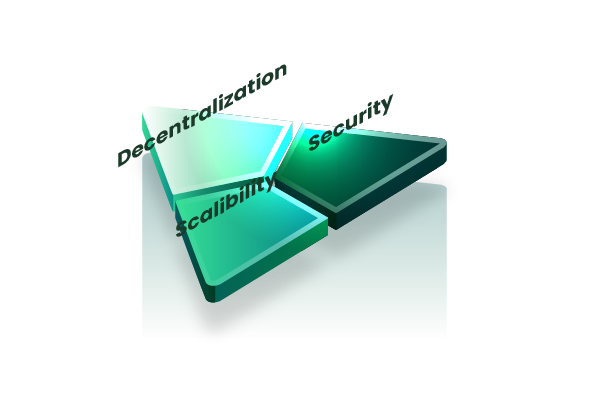
What is the blockchain trilemma? It is a common way to describe a core trade-off in blockchain design. The trilemma says a blockchain wants to be strong in these three areas:
- Security
- Decentralization
- Scalability
The problem is that improving one area often makes at least one other area harder to keep strong. Not always, but often enough that it shapes most blockchain choices.
Security: Keeping the System Safe
Security means the network can resist attacks and wrong changes. A secure blockchain should make it very hard to:
- Change old transactions
- Steal funds by breaking consensus rules
- Block other people’s transactions for a long time
Security comes from many parts, such as cryptography, network design, and how the system reaches agreement (consensus).
Decentralization: Avoiding Too Much Control
Decentralization means power is spread across many independent users. In a decentralized network:
- Many different people run nodes
- No single group can easily change the rules
- Users can verify the chain on their own device
When decentralization is strong, it is harder for one actor to control the network. It can also help the system stay open and fair.
Scalability: Handling Many Users and Transactions
Scalability means the network can process many transactions with low delay and low cost. If a network cannot scale, it can face:
- High fees during busy times
- Slow confirmation times
- Limited use for daily payments and apps
Most popular blockchains are used by people across the world. So scalability is not just “nice to have.” It is needed for large use.
The three parts of the blockchain trilemma
| Trilemma goal | Simple meaning | What can go wrong if weak? | Common ways teams try to improve it |
| Security | The chain is hard to attack or change | double spending, chain reorgs, loss of trust | strong consensus, many validators, clear rules |
| Decentralization | Many people can run the system and verify it | control by a few, censorship risk, rule capture | low node costs, open access, simple hardware needs |
| Scalability | Many transactions can be processed fast and cheap | high fees, slow apps, users leave | L2 networks, sharding, rollups, better data handling |
Why the Trilemma Happens in Real Networks
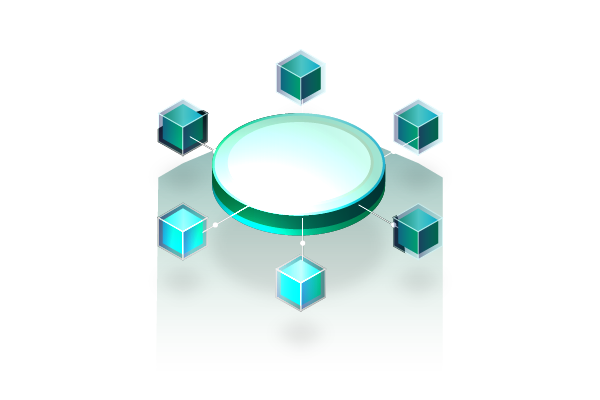
The trilemma is not a law of nature, but it shows a real pattern. It happens because a blockchain is a shared system where many nodes must agree. Agreement across many nodes takes time and resources.
Why Security and Decentralization Can Slow Things Down
A more decentralized network often has:
- More nodes
- Nodes in many places
- Different internet speeds and hardware
To keep security high, the network often asks these nodes to validate and share data. That can limit how fast the system can move. If blocks get too large or too frequent, many nodes may not keep up. Then fewer nodes can run the network, and decentralization drops.
Why Scaling Can Reduce Decentralization
A simple way to scale is to make the base chain do more work per second. But if the base chain requires high-end machines or big storage, only a small number of people can run nodes. That pushes the system toward central control.
For example, if it costs a lot to run a full node, most users will not do it. Then they must trust others to tell them what is true. That may be fine in some cases, but it is not full decentralization.
Why Scaling Can Also Affect Security
Some scaling methods change how data is stored or checked. If fewer nodes check the full data, it can create new risks. Also, some systems scale by using fewer validators or by giving more power to a small set of actors. That can raise the chance of:
- Collusion
- Censorship
- Sudden rule changes
A Simple Way to Think About It
Many blockchains aim for this balance:
- Security: strong consensus and hard-to-break rules
- Decentralization: many people can join and verify
- Scalability: low cost and high speed
But the network has limited “space” in each block and limited ability to send data to every node. That is why the blockchain trilemma keeps coming up.
Also Read: Structure of a Block in Blockchain: What’s Inside and Why It Matters
How L2s Try to Balance the Blockchain Trilemma
Layer 2 (L2) systems are built on top of a base blockchain (often called Layer 1 or L1). The main idea is simple:
- Keep the base chain secure and decentralized
- Move most activity to a faster layer
- Send proof or summaries back to the base chain
This approach tries to improve scalability without breaking security too much.
What is an L2 in Simple Words?
An L2 is a network or system that:
- Processes transactions outside the main chain
- Later posts results to the main chain
- Uses the main chain for final proof and settlement
Different L2 types do this in different ways. Some depend more on the base chain than others.
Main L2 types (High Level)
Here are common L2 designs:
- State channels
Two or more users transact off-chain and only settle the final result on-chain. This can be fast and cheap, but it works best for repeated actions among known users.
- Sidechains
A separate chain that runs in parallel. It can be fast, but it may not share the same security as the main chain. Security depends on the sidechain’s own validators.
- Plasma-style systems (older idea)
These use child chains and proofs, but can be complex for users. Many modern designs focus more on rollups instead.
- Rollups (often treated as L2, but important enough for its own section)
Rollups process transactions off-chain and post data and proofs to the base chain. Many people see rollups as one of the strongest L2 paths today.
This article focuses most on L2s in general, then explains rollups in more detail later.
How L2s Help Scalability
L2s scale by doing less work on the base chain:
- Fewer on-chain transactions
- More actions per batch
- Lower fees for users
If a base chain can only process a limited number of transactions per second, L2s can multiply that by handling many transactions elsewhere.
What L2s Mean for Security
Security depends on the type of L2:
- Some L2s inherit strong security from the base chain (especially rollups).
- Others rely more on their own validators (like many sidechains).
A key question is: If the L2 fails, can users still recover funds using the base chain?
Systems that give users a clear path to exit back to L1 are often seen as safer.
What L2s Mean for Decentralization
L2s can improve the base chain’s ability to stay decentralized by lowering the load on L1. But L2s can also create new central points, such as:
- One main operator (sequencer) that orders transactions
- Special roles that can pause the network
- Limited ways to challenge bad activity
Many L2 teams work on decentralizing these parts over time, but it is still a key area to watch.
Common Limits of L2s
Even strong L2 systems face limits:
- Bridges can be risky if badly designed
- Users may face delays when moving funds back to L1
- The L2 can have its own downtime
- The user experience can be confusing across many networks
So L2s are a scaling path, but they still need careful design and clear rules.
How Sharding Tries to Scale Without Losing Decentralization
Sharding is a scaling method where the blockchain is split into parts, called shards. Instead of every node handling every transaction, nodes handle smaller pieces of the total work.
What Sharding Means in Simple Words
Without sharding, a blockchain is like one shared notebook that every node copies in full. With sharding, it is more like:
- Many smaller notebooks
- Each notebook covers part of the activity
- The system still links them so it stays one network
The goal is to increase total capacity while keeping node costs manageable.
Why Sharding Can Improve Scalability
When the work is split:
- Each node stores less data
- Each node processes fewer transactions
- The network can handle more activity overall
In theory, this can raise throughput as more shards are added.
The Hard Part: Keeping Security Strong
Security becomes more complex because:
- Not all validators see all data
- Shards must communicate safely
- The system must stop attackers from taking over one shard
If attackers can focus power on a single shard, they may try to break it. A secure sharding design often needs:
- Random assignment of validators to shards
- Frequent reshuffling
- Strong rules for cross-shard messages
Cross-Shard Communication
Real apps often need data from many places. So shards must talk to each other. This can add:
- Extra steps for finality
- More time for some actions
- More complex logic for developers
Sharding can help scaling, but it often makes the system harder to design and test.
Sharding and Decentralization
Sharding can support decentralization if it lowers the cost of running a node. If nodes do not need to store the full chain, more people can join.
But there is a risk: if sharding becomes too complex, normal users may stop verifying the network and rely on big providers. So sharding must keep verification simple enough for many users to trust the system without a middleman.
Sharding in Practice
Different blockchains use sharding in different ways. Some try:
- Data sharding (split data availability)
- Execution sharding (split transaction processing)
- Hybrid models
The details vary, but the main idea stays the same: split work to raise capacity.
Also Read: Consensus Mechanism in Blockchain: Why It Matters for Security and Scalability
How Rollups Try to Balance Security, Decentralization, and Scale
Rollups are often seen as one of the strongest answers to the question, “What is the blockchain trilemma?” This is because rollups aim to keep:
- L1 security as the base
- More transactions per second
- Lower costs for users
What is a Rollup?
A rollup runs transactions outside the main chain, then “rolls up” the results into a smaller on-chain record. This record can include:
- Transaction data (or a form of it)
- A new state root (a summary of the latest state)
- Proof that the batch is correct (depending on rollup type)
The base chain becomes the final judge.
The Two Main Types of Rollups
Rollups usually fall into two groups:
- Optimistic Rollups
Optimistic rollups assume batches are correct by default. But they allow a window of time where anyone can challenge a bad batch. If a challenge proves the batch is wrong, the system can reject it and punish the bad actor.
Key points:
- Simpler proofs
- Often faster to run
- Withdrawals to L1 can take longer because of the challenge window
- ZK Rollups (zero-knowledge rollups)
ZK rollups use cryptographic proofs to show a batch is correct. The proof is checked on the base chain. This can reduce the need for long challenge windows.
Key points:
- Strong correctness proofs
- Often faster final withdrawals
- Proof creation can be complex and heavy
Both types aim to reduce L1 load while keeping strong security ties to L1.
Why Rollups Can Help Security
Rollups can inherit security from L1 when:
- The L1 verifies proofs or supports challenges
- The rollup posts enough data to L1 for users to verify
- Users have a clear exit path back to L1
This is why people often say rollups “borrow” the base chain’s security.
Why Rollups Can Help Scalability
Rollups batch many transactions into one L1 post. This can:
- Reduce gas cost per user action
- Improve throughput
- Keep L1 blocks less full
Some rollups also compress data, which can lower costs more.
The Decentralization Question for Rollups
Rollups can still be centralized in practice if:
- One sequencer controls ordering
- Upgrades are controlled by a small group
- Only a few parties can submit proofs
Many rollups plan steps toward decentralization, such as:
- Shared or rotating sequencers
- Stronger on-chain governance rules
- Open proving systems
A key check is: Who can stop the system, reorder it, or change it? If the answer is “a small group,” decentralization is not strong yet.
Data Availability: A Key Term
For rollups, data availability matters a lot. Users need enough data to:
- Verify state changes
- Rebuild the rollup state if needed
- Exit safely if the operator fails
If data is not available, users may not be able to prove what they own. So many rollups post data to L1 or use other strong methods to ensure data can be accessed.
L2s, sharding, and rollups compared
| Approach | Main goal | How it scales | Security anchor | Decentralization risk to watch | Main limits |
| L2 (general) | Move activity off L1 | Off-chain execution, fewer L1 actions | Depends on design | central operators, bridge control | bridge risk, user complexity |
| Sharding | Split L1 work | many shards share load | L1 design itself | complex system can push users to big providers | cross-shard work, complexity |
| Optimistic rollups | Scale with challenges | batch tx + fraud proofs | L1 for settlement and disputes | sequencer power, upgrade keys | withdrawal delay, challenge needs |
| ZK rollups | Scale with proofs | batch tx + validity proofs | L1 verifies proofs | prover concentration, upgrade keys | proof complexity, tool maturity |
Conclusion
The blockchain trilemma is a simple way to describe a real design problem: blockchains want security, decentralization, and scalability, but these goals often pull in different directions. This is why the question “What is the blockchain trilemma?” matters for anyone using crypto apps, not only engineers.
L2s, sharding, and rollups are three major paths to improve scaling. L2s reduce load on the base chain, sharding splits the work across parts of the network, and rollups batch transactions while keeping a strong link to the base chain. Each method can improve speed and cost, but each also brings new trade-offs, like bridge risk, system complexity, or central control in early stages.
This article’s main point is that there is no single perfect answer today. The best option depends on what is being built and what risks are acceptable. When reading about a new chain or L2, it helps to ask: how does it protect security, how does it keep power spread out, and how does it scale for real users under real demand.

Joshua Soriano
I am a writer specializing in decentralized systems, digital assets, and Web3 innovation. I develop research-driven explainers, case studies, and thought leadership that connect blockchain infrastructure, smart contract design, and tokenization models to real-world outcomes.
My work focuses on translating complex technical concepts into clear, actionable narratives for builders, businesses, and investors, highlighting transparency, security, and operational efficiency. Each piece blends primary-source research, protocol documentation, and practitioner insights to surface what matters for adoption and risk reduction, helping teams make informed decisions with precise, accessible content.